

The Institute of Regenerative & Molecular Orthopaedics

Chronic Thumb Sprain

Home > Stem Cell & PRP Conditions Treated > Chronic Thumb Sprain

Chronic Thumb Sprain

A thumb sprain, also known as "skier's sprain," is an injury to the ulnar collateral ligament or the radial collateral ligament at the base of the thumb. It is caused when the thumb suddenly and forcefully bends past its normal range of motion. Immediate swelling occurs with bruises developing after a few days. Sprains of this nature often occur during hard falls or collisions, usually while participating in competitive sporting events like volleyball, soccer, and skiing.

Chronic thumb sprain is an injury that has been ongoing for at least one or two months. The patient suffers continuous pain and swelling around the thumb joint, which may feel very loose and weak. Pain can be exacerbated when attempting to grasp and hold onto objects using the thumb and forefinger. This pinching movement is often greatly hindered. The ability to perform certain basic tasks like using a pencil or tying shoe laces might be impaired. Playing sports is often not an option.

In the early stages of chronic thumb sprain, doctors may recommend physiotherapy treatment, massage, and mobilization using wrist-thumb or thumb supports to alleviate symptoms and strengthen the joint. Depending on the severity of the injury, hand therapy balls and therapeutic putty may also be used to strengthen the thumb. However, if the ligament is completely torn, surgical procedures may be used to repair the lesion. With advances in modern medical technology, non-invasive methods like stem cell treatment are becoming available to heal and rehabilitate joint injuries.

The Institute of Regenerative & Molecular Orthopaedics is a leading contributor for cutting edge research and practical applications, aimed at treating chronic thumb sprain and other orthopedic injuries. Board certified orthopedic surgeon, Dr. Joseph Purita, works to seamlessly integrate therapeutic knowledge and regenerative medicine. Stem cell treatment involves introducing mesenchymal stem cells to damaged ligament tissue, repairing and replacing the injured ulnar or radial collateral ligament.

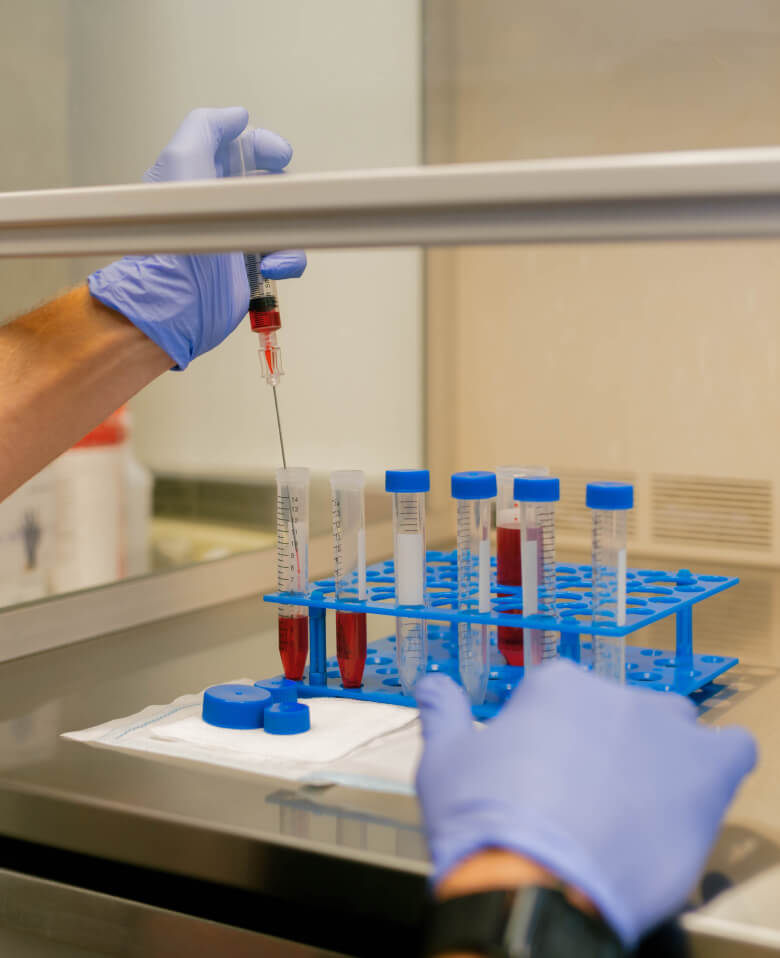
In order for stem cells to do its job, platelet rich plasma or PRP, which contains different growth factors called cytokines, are released into the body. Cytokines incite the stem cells to reproduce in the body, and to begin healing. Continued breakthroughs in medical science and regenerative medicine are necessary to produce more safe and effective treatment elements, like platelet rich plasma. When treatments like these become the norm, more invasive procedures to heal chronic thumb sprains, and the painful recuperation periods which follow, may become a thing of the past.


**Please note that the above condition represents the vast majority of conditions which we treat with either PRP injections or a combination of both PRP injection and stem cell injections. The method of treating the condition depends upon the severity of the condition, age of the patient, and other factors. In general, when treating tendonitis, a PRP injection with possibly Human Growth Hormone is usually sufficient. The more severe conditions such as significant joint arthritis may need an addition to PRP injections—such as an injection of bone marrow stem cells. For more moderate joint arthritis, rotator cuff tears, meniscus injuries, and other tendon tears and injuries, a combination of PRP injections, fat stem cell injections, and Human Growth Hormone injections.